AI integration for products, data, and workflows
Oberig helps companies add practical AI to existing software: LLM features, RAG search, document automation, support assistants, and workflow tools built for real users.
AI work we take on
From RAG search and document automation to controlled AI agents, we build AI features around the process you already run, not around a generic demo.
AI integration into existing products
You have an existing product and want to add AI: smarter search, a support assistant, automated document handling, or workflow help inside your current UI. We integrate current OpenAI, Anthropic Claude, Mistral, Llama, or other models through clean APIs without rebuilding what already works. Most integrations ship in 2-6 weeks.
- LLM integration via clean APIs - OpenAI, Anthropic Claude, Llama, Mistral, chosen based on your use case
- RAG systems over your documents - your knowledge base becomes searchable and queryable by AI
- Embedded in your existing UI - no full rebuild needed, AI capabilities added through APIs or microservices
- 2–6 weeks to production - scope defined upfront, working prototype visible in the first two weeks
RAG search and document automation
When your team drowns in documents, contracts, reports, or internal knowledge that no one can find, we build retrieval systems that make it searchable and usable. RAG pipelines over your own data, document extraction, semantic search, and AI assistants that answer from your actual content.
- RAG pipelines over your knowledge base - chat with your own documents, manuals, contracts, or reports
- Structured data extraction from documents - pull fields, figures, and clauses from PDFs and forms automatically
- Semantic search over large content sets - find relevant results even when exact keywords don't match
- Internal AI assistants - support bots, HR FAQ tools, sales knowledge tools, onboarding assistants
AI consulting & proof of concept
Not sure where AI makes sense for your business? We audit your processes, identify what’s worth automating, and build a working POC with real data in 2–4 weeks. You evaluate the results, then decide whether to continue. No multi-month research phases before you see anything real. AI readiness assessment, opportunity mapping, cost-benefit analysis included.
- AI readiness assessment - we tell you where AI will save money and where it will waste it
- Working proof of concept in 2–4 weeks - on your real data, not a generic demo
- Cost-benefit analysis included - you know the ROI estimate before committing to a full build
- Honest no-go recommendation if it does not add value - you will know in weeks, not after six months of development
AI agents and workflow automation
When repetitive multi-step tasks consume your team’s time — qualifying leads, routing tickets, extracting data, drafting responses — we build controlled AI agents that handle the steps automatically but within defined boundaries, with approval checkpoints and full audit logs. Practical automation where AI reliably saves time, not an unsupervised robot.
- Tool-using assistants - AI that reads your CRM, searches your knowledge base, calls internal APIs, and takes the next step based on context
- Approval workflows - agents that prepare work for human review, not replace human judgment on sensitive decisions
- Multi-step automation - classify incoming requests, enrich with data, draft a response, route to the right team
- Full audit trail - every agent action is logged, traceable, and adjustable when business logic changes
AI projects we have delivered
A few examples from the last few years. Client names stay confidential, results do not.
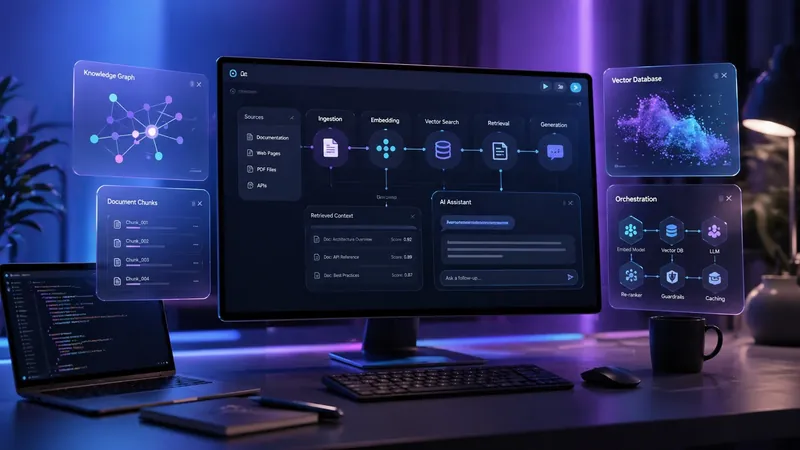
LLM engineer for a German internal AI product
Problem: A German company was building an internal AI assistant for its own documents and business knowledge. The team had a clear idea of what they needed, but no one with practical experience in LLM integration and retrieval-based systems to move it forward.
Solution: A senior Python engineer joined the team and helped design the retrieval pipeline, set up the knowledge indexing flow, and integrate the assistant with the LLM stack. The project moved from early prototype to a working internal tool.
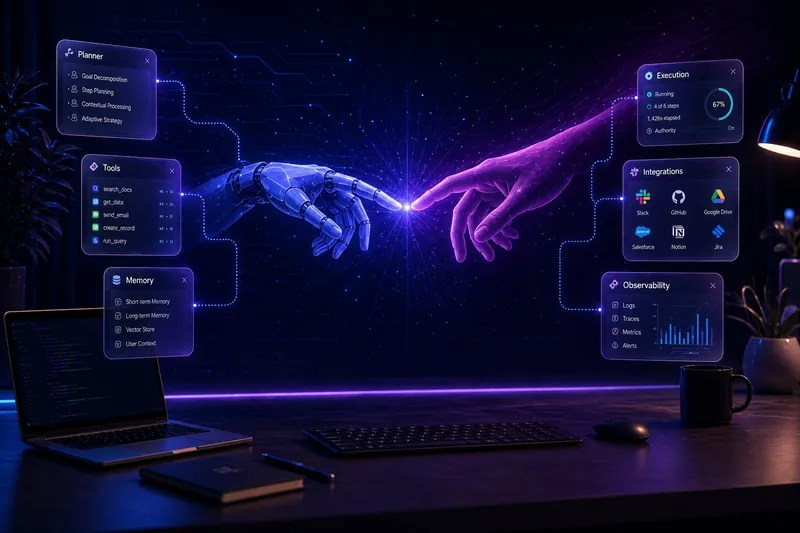
AI agent engineer for an Austrian SaaS product
Problem: An Austrian SaaS company wanted to add AI-driven workflow features so users could trigger multi-step actions without writing code. Their product team was strong, but no one had practical experience building this kind of functionality.
Solution: An AI engineer joined the team, built the agent layer on top of their existing backend, and handled the tool and API integrations. The feature shipped on time.
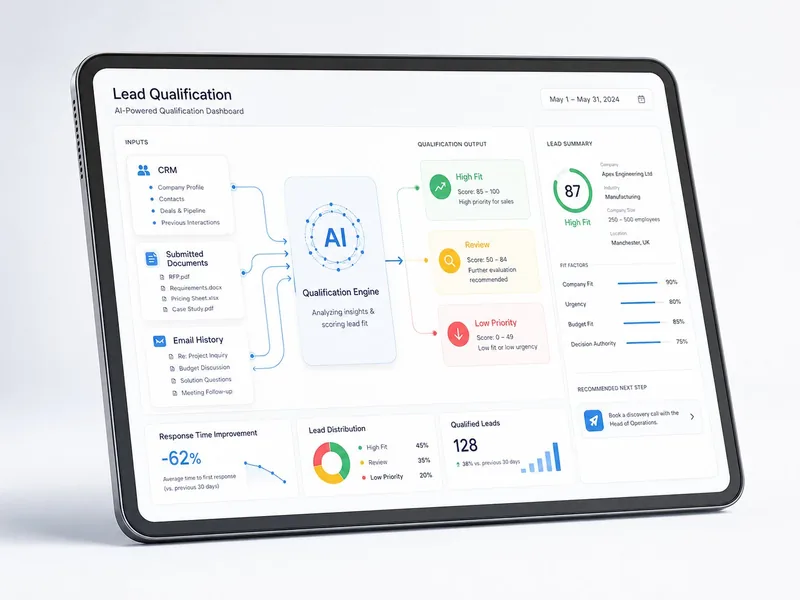
AI-assisted lead qualification for a UK B2B company
Problem: A UK B2B company was getting more inbound leads than its sales team could properly qualify. Qualification was manual, inconsistent, and slow. Good leads were going cold while the team was busy sorting through ones that would never convert.
Solution: We built a lead qualification workflow that pulled context from the CRM, submitted documents, and email history, then generated a structured summary with a suggested next step for the sales rep. Response time dropped from days to minutes.
From AI idea to a controlled production feature
We start small, test on real data, and only move to production when the use case is clear, measurable, and worth building.
-
01
Scope the use case
We review your workflow, data sources, users, security needs, and success criteria. The goal is to find the smallest AI feature worth testing. 1-2 weeks.
-
02
Build a proof of concept
We build a working POC with real data, not a generic demo. You test answer quality, retrieval accuracy, latency, and business value before committing to a larger build. 2-4 weeks.
-
03
Prepare for production
We add APIs, UI integration, access control, approval steps, fallback behavior, logging, and monitoring so the AI feature can work inside your real product or workflow. 4-12 weeks.
-
04
Measure and improve
After launch, we monitor outputs, costs, failures, and user feedback. We improve prompts, retrieval, evaluation sets, and workflow logic as your data and usage grow.
How we make AI safe enough to use
A good demo is easy. A reliable AI feature needs boundaries, tests, monitoring, and clear fallback behavior.
Grounded answers
For RAG systems, answers are based on approved sources, not general model memory. When the system cannot find enough evidence, it says so.
Evaluation before launch
We define expected answers, source documents, edge cases, latency targets, and cost limits before production release. Quality is measurable, not assumed.
Human approval where needed
For sensitive workflows, AI prepares, suggests, and routes. Humans approve the final action. No unsupervised AI on decisions that matter.
Monitoring and audit logs
Prompts, outputs, agent actions, tool calls, costs, and failures are logged so the system can be measured and improved over time.
AI that ships, not AI that demos
20+ years of engineering
AI is a tool, not a magic trick. Twenty years of engineering discipline behind every model. Clean code, proper tests, production-grade deployment.
POC in 2–4 weeks
No months of research before you see anything. A working proof of concept on your data, fast enough to actually make decisions.
Full-stack capability
AI doesn't live in a vacuum. The model is 20% of the job. The other 80% is frontend, backend, APIs, infrastructure. One team builds it all.
Your data stays yours
NDA before you share anything. GDPR built in. We can deploy on-premise or in your private cloud when data cannot leave your infrastructure.
Where AI saves time fastest
The six workflow problems where AI has the clearest ROI and the shortest path to production.
Document search & knowledge retrieval
Your team wastes hours searching manuals, reports, or internal knowledge. A RAG system lets staff query your content with natural language and get accurate, sourced answers.
Customer and support automation
High support volume, repetitive questions, slow first response. AI handles first-line queries, routes complex cases to humans, and cuts response time from hours to seconds.
Lead qualification and sales workflows
More inbound than your sales team can properly handle. AI pulls CRM context, submitted documents, and email history, then generates a structured summary with a suggested next step.
Document extraction and processing
Manual data entry from PDFs, contracts, invoices, or forms. Structured extraction pulls the fields and figures you need automatically, with human review flagged for edge cases.
Contract review and clause extraction
Legal and procurement teams reviewing contracts manually. AI highlights non-standard clauses, extracts key terms, and flags deviations from templates — without replacing legal judgment.
Internal workflow automation
Repetitive multi-step tasks: classify requests, enrich with data, draft a response, route to the right team. Controlled AI agents handle the steps with approval checkpoints and audit logs.
AI stack for product integration
We keep the stack practical: the right model, reliable retrieval, clean APIs, and deployment that fits your data sensitivity, budget, and product requirements.
LLM providers
OpenAI, Anthropic Claude, Mistral, Llama, and other open-source models selected by use case, latency, cost, and data requirements.
RAG and knowledge systems
LangChain, LlamaIndex, embeddings, semantic search, document chunking, retrieval pipelines, and vector databases such as pgvector, Qdrant, Weaviate, or Pinecone.
Backend and product integration
Python, FastAPI, Node.js, PostgreSQL, REST APIs, webhooks, authentication, role-based access, and integration with your existing product or internal tools.
Agents, evaluation & observability
LangGraph for agent orchestration, LangSmith and Langfuse for tracing and evaluation, prompt versioning, cost tracking, Docker, cloud or private-cloud deployment, and monitoring for production AI features.
AI development questions
How long does it take to build an AI proof of concept?
A typical AI proof of concept takes 2 to 4 weeks. This includes data assessment, model selection, and a working demo you can evaluate with real data. The goal is to validate feasibility before committing to a full build.
Can you integrate AI into our existing application?
Yes. AI capabilities get integrated into existing web and mobile applications through APIs, microservices, or embedded models. A chatbot in your customer portal, document processing in your admin panel, recommendations in your app: we connect AI to what you already have. Most integrations take 2 to 6 weeks.
What AI models and platforms do you work with?
The team works with current OpenAI, Anthropic Claude, Meta Llama, Mistral, and other open-source models. We choose the model based on your use case, budget, and data sensitivity requirements.
Do you work with proprietary or sensitive data?
Yes. NDA from day one. We comply with GDPR and can deploy models on-premise or in your private cloud environment. Your data stays in your infrastructure if that's what you need.
How much does AI development cost?
It depends on the first useful step. A short AI feasibility review or scope check can start from €1,000–5,000. A focused prototype or proof of concept usually ranges from €3,000–15,000. A first production version with integrations, access control, logging, and monitoring usually starts from €7,000–30,000. If the system needs complex workflows, sensitive data handling, high usage volume, or multiple integrations, we estimate it separately after discovery.
What if AI doesn't work for our use case?
That's exactly why we start with a POC. If the proof of concept shows that AI doesn't add enough value for your specific problem, we'll tell you honestly and recommend alternatives. You'll know in 2–4 weeks, not 6 months.
Can you fine-tune a model on our data?
Yes. Fine-tuning works on open-source models (Llama, Mistral) and commercial APIs (OpenAI, Claude) using your proprietary data. It is especially effective for domain-specific language and tasks where general models underperform. RAG systems are often a lighter, faster alternative when fine-tuning isn't the right fit.
How do you reduce hallucinations in AI systems?
We ground answers in approved sources rather than letting the model rely on general knowledge. For RAG systems this means strict retrieval over your documents, confidence thresholds, and fallback responses when no relevant source is found. For agents we add approval steps and limit the actions AI can take without human confirmation. Every production AI system we build includes evaluation test cases defined before development starts, so quality is measurable, not assumed.
How do you measure AI quality before launch?
We define evaluation criteria at the start of the project: expected answers, accepted source documents, retrieval accuracy, latency, cost per task, and failure scenarios. We build a test dataset from your real data and run it against the system before release. After launch, we set up monitoring and logging so you can see where the AI performs well and where it needs adjustment. The goal is a system you can measure and improve, not a demo that looked good once.
Build your AI product full-cycle
AI chatbot development
Support assistants, internal knowledge bots, and customer-facing chat built on your data and integrated into your product.
AI document processing
Extract structured data from PDFs, contracts, invoices, and forms automatically. Reduce manual data entry and review time.
AI workflow automation
Controlled AI agents that handle multi-step business tasks: classify, enrich, route, and act — with approval steps and audit logs.
Web development
Building an AI-powered web app? We handle the full stack: from React frontend to Python backend to model deployment.
What would you build if AI was reliable?
Tell us your challenge. We assess whether AI is actually the right tool, propose a plan, and get back within 48 hours with a concrete next step.
Discuss your AI project →