Dedicated developers,
without the hiring process
Add experienced developers to your team without going through months of hiring. We work with engineers across the EU and Ukraine: timezone overlap with Western Europe, rates noticeably lower than local hiring, contracts and admin on our side.
Call, email, or form. Tell us about the role and the project, we send matching profiles back.
Does this sound familiar?
Team extension works best in specific situations. See if yours is one of them.
We have the roadmap, but not enough engineers to ship it.
SaaS teams add developers directly into the sprint. No months of hiring, no onboarding a full team.
We keep turning down client work because the team is at capacity.
Agencies extend capacity with developers who work under your management, billed hourly, no long-term commitment.
I need one senior engineer, not an outsourced team to manage.
Founders get a single developer who owns a feature, a service, or a stack end-to-end.
Our freelancer disappeared mid-project. Again.
Dedicated developers come with accountability. If the fit is wrong, we replace them at no extra cost.
Specialists you can hire
Frontend
React, Next.js, Vue, Angular, TypeScript. Engineers with 5–10 years in SaaS and enterprise products. Component architecture, performance, design system integration.
- React, Next.js, Vue, Angular, TypeScript - App Router, Server Components, SSR, design system implementation
- 5–10 years of SaaS and enterprise UI experience - engineers who have built at scale, not just tutorials
- Component architecture and performance - bundle analysis, lazy loading, Core Web Vitals, Lighthouse scores
- Design system integration - Figma to code, Storybook documentation, pixel-accurate implementation
Backend
Node.js, Python, Java, .NET, Go. APIs, microservices, database design, backend systems. Engineers who work independently and own their services end to end.
- Node.js, Python, Java, .NET, Go - matched to your existing stack or the right choice for a new one
- API design and microservices - REST, GraphQL, event-driven architecture, message queues (Kafka, RabbitMQ)
- Database design and optimization - PostgreSQL, MySQL, MongoDB, Redis: schema design and query tuning
- End-to-end ownership of services - engineers who own their services from requirements to monitoring
Full-stack
React or Next.js on the front, Node.js or Python on the back, TypeScript throughout. Engineers who move a feature from UI to database without handoffs. Good for lean teams and fast-moving products.
- React/Next.js + Node.js or Python, TypeScript throughout - one engineer, one context, no handoff delay between layers
- API and database ownership - REST or GraphQL, PostgreSQL, Prisma or Drizzle, schema design included
- Good fit for early-stage products and lean teams - move features end to end without splitting every ticket across two people
- Senior in both layers - not a generalist who dabbles, but engineers who are strong enough to own either side independently
AI / LLM integration
Python, FastAPI, OpenAI API, Anthropic Claude, LangChain, LlamaIndex. LLM features, RAG systems, AI agents, and workflow automation. Engineers who ship AI to production, not just demos.
- Python, FastAPI, OpenAI API, Anthropic Claude, LangChain, LlamaIndex - production LLM apps and agent frameworks, not just API wrappers
- RAG systems and vector search - Pinecone, pgvector, Weaviate: chunking strategies, embedding pipelines, retrieval tuning
- AI workflow automation - structured outputs, tool use, function calling, multi-agent pipelines, n8n integrations
- Production-grade delivery - latency budgets, cost tracking, fallback logic, evals — nothing that only works in a notebook
DevOps
AWS, GCP, Azure, Kubernetes, Terraform, CI/CD. Infrastructure as code, cost optimization, monitoring. Engineers who keep systems running without handholding.
- AWS, GCP, Azure, Kubernetes, Terraform, Helm - infrastructure as code from day one, nothing configured by hand
- CI/CD pipeline design - GitHub Actions, GitLab CI, ArgoCD: automated testing, building, and deployment
- Cost optimization and monitoring - you pay for what you use, not for what someone left running
- Incident response and on-call setup - runbooks, alerting, and escalation paths built into the infrastructure
QA
Manual and automation testing. Cypress, Playwright, API testing. Performance, security, and accessibility audits. Engineers who find bugs before your users do.
- Cypress, Playwright, Vitest, API testing - automation framework matched to your stack and test strategy
- Performance, security, and accessibility audits - k6 load testing, OWASP scan, WCAG 2.2 compliance
- Test strategy and coverage plan - what to automate, what to test manually, what to skip, all decided upfront
- Finds bugs before your users do - test coverage that gives you confidence to ship on Friday, not fear
Mobile
Swift, Kotlin, Flutter, React Native. Native iOS and Android development, cross-platform apps. App Store and Google Play submission included.
- Swift (iOS), Kotlin (Android), Flutter, React Native - native and cross-platform, matched to your product needs
- App Store and Google Play submission - metadata, screenshots, review guidelines, we handle the full submission
- Clean architecture and solid test coverage - code that your team can maintain and extend after we hand off
- Device matrix testing throughout - tested on real devices at each sprint, not just emulators at the end
How we find the right engineer for you
No months of recruitment. No agency middlemen. Just engineers who know what they are doing.
Step 01
You brief us
Stack, seniority, timezone, how your team works. 15 minutes by email or a short call — whatever suits you. No forms, no intake questionnaires.
Step 02
NDA signed first
Before we share any candidate details, NDA and IP assignment go out. You get them within 24 hours of the first conversation. Everything in writing before we proceed.
Step 03
We screen candidates
Our senior engineers run the technical interviews against your requirements: depth, seniority, English. We filter out people who look good on paper but cannot deliver. You only see the ones who passed.
Step 04
You review and pick
We send profiles with a short assessment for each. Review CVs async, ask questions by email, or meet the candidate on a call. Nobody starts without your sign-off.
Step 05
Contract and rate
Service agreement, fixed monthly rate, start date. No retainers, no hidden fees, no currency risk for you. One invoice per month.
Step 06
Developer joins your team
Slack, GitHub, Jira access on day one. Your hours, your standups, your process. We check in after the first week to make sure everything is working.
What does it cost?
Transparent starting rates for team extension. Final pricing depends on role, seniority, stack, and monthly workload.
We do not sell junior developers as senior engineers.
The real first-year cost of hiring a senior developer
Hiring a senior developer in Germany rarely means paying only the salary. Employer contributions, recruitment fees, equipment, onboarding, and months of hiring time can push the first-year cost far above the gross salary. Here is the full picture.
- Gross salary (senior / strong senior role): €85,000–100,000/year
- Employer social contributions (~21%): €18,000–21,000/year
- Recruitment agency fee (typically 15–30%, often 20–25% for senior tech): €17,000–25,000 one-time
- Equipment, onboarding, office overhead: €5,000–8,000/year
- Time to hire: 3–4 months, productivity gap included
- Rate: €45–55/h × 160 hours = €7,200–8,800/month
- Annual cost: €86,000–106,000
- No employer taxes, no social contributions
- No recruitment fee, no equipment costs
- Start: days, not months
For Netherlands, Austria, and Switzerland the difference is similar or larger.
Salary ranges based on PayScale and Glassdoor data for Germany, 2025. Employer contribution rates per Deel. Recruitment fee ranges per Hiring Hub.
Freelancer, in-house hire, or team extension?
The right choice depends on what you need: a quick task, a permanent role, or reliable engineering capacity without hiring overhead.
| Freelancer | In-house hire | Oberig team extension | |
|---|---|---|---|
| Best for | Small isolated tasks | Permanent core roles | Ongoing development capacity |
| Start time | Fast if available | Usually 2–4 months | Days to 1–2 weeks |
| Technical screening | Usually yours | Fully yours | Done by senior engineers |
| Management | You manage directly | You manage directly | Your workflow, our backup |
| Delivery risk | Depends on one person | Low after hire, high before hire | Replacement if fit is wrong |
| Scaling | Find another person | Recruit again | Add roles when needed |
| Admin load | Contracts, invoices, follow-up | Payroll, taxes, benefits, equipment | One contract, one invoice |
| Commitment | Project-based | Long-term employment | Monthly or hourly setup |
Why scale with us
Profiles, not hiring chaos
Tell us the stack, seniority, and workload. We screen engineers against your brief and send only people who match the role.
You stay in control
Your tools, your workflow, your standups, your rules. Contracts, payroll, admin? That's on us.
20+ years of engineering work
We have been placing and working with developers since 2001. We know the difference between someone who interviews well and someone who can deliver.
Lower risk to start
If the fit is wrong, we replace the developer at no extra cost. NDA, GDPR, and IP protection are set before work begins.
How do you want to work?
We work on Dedicated Team, Time & Material, Fixed Price, and Hybrid arrangements. Most team extension projects run on T&M or Dedicated Team. If you are not sure which fits, we will help you figure it out on the first call.
See all models with trade-offs →Developers work exclusively on your projects under your management. You set the priorities. Billing is monthly. Best for ongoing product development and long-term capacity.
You pay for actual hours worked. Scope can change as the project evolves. Best for R&D, early-stage products, and projects where requirements are not fully locked.
Scope, timeline, and cost agreed upfront. Works when requirements are clear and the deadline is real. MVPs, defined features, promo sites.
Recent placements
Four examples from the last two years. Client names are confidential. Problems, decisions, and results are real.

React and Node.js developers for e-commerce company
Problem: A Netherlands product company was building an e-commerce platform and needed senior frontend and backend engineers who could jump in without a long handoff period. Their in-house team had the vision but not the capacity to execute on schedule.
Solution: A frontend and backend developer from our team joined the project, worked as part of their core team for two years, and stayed on for periodic support tasks after the main build wrapped.

.NET engineers for US logistics company
Problem: A US logistics software company needed to migrate their legacy system to the Microsoft platform without slowing down their product roadmap. Hiring locally would have taken months. They needed two senior .NET engineers who could own their work without daily oversight.
Solution: Two senior .NET developers joined the project and worked independently alongside the client's team. The migration moved forward on schedule while the roadmap kept its pace.
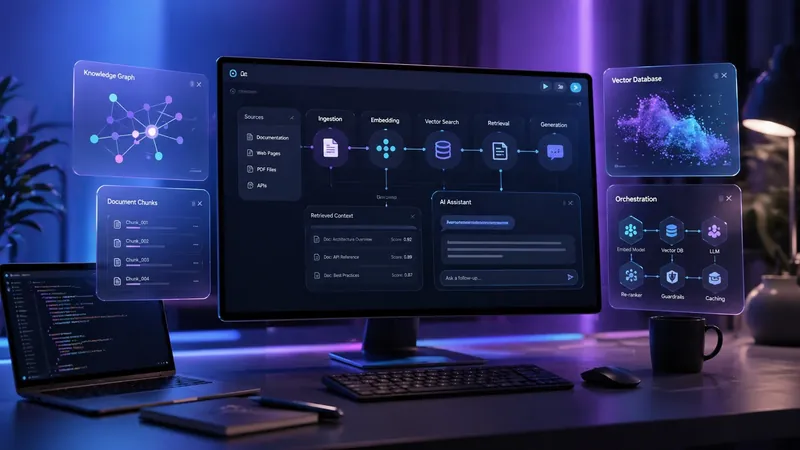
LLM engineer for a German internal AI product
Problem: A German company was building an internal AI assistant for its own documents and business knowledge. The team had a clear idea of what they needed, but no one with practical experience in LLM integration and retrieval-based systems to move it forward.
Solution: A senior Python engineer joined the team and helped design the retrieval pipeline, set up the knowledge indexing flow, and integrate the assistant with the LLM stack. The project moved from early prototype to a working internal tool.
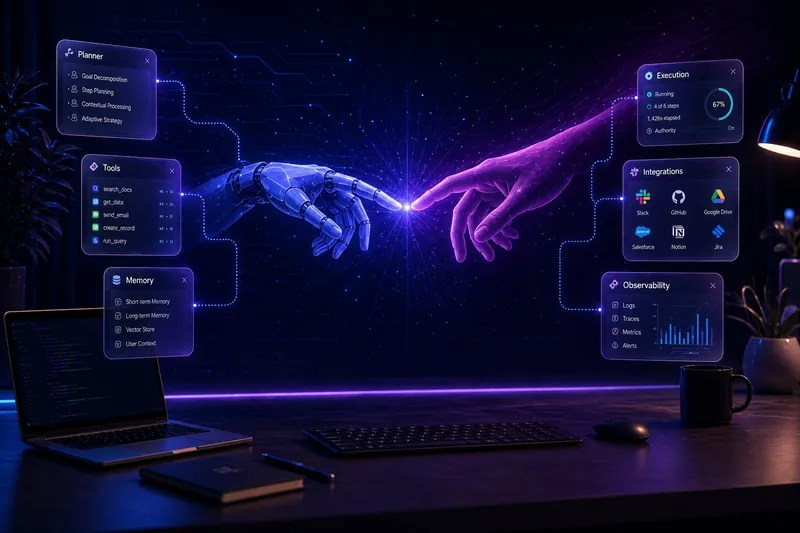
AI agent engineer for an Austrian SaaS product
Problem: An Austrian SaaS company wanted to add AI-driven workflow features so users could trigger multi-step actions without writing code. Their product team was strong, but no one had practical experience building this kind of functionality.
Solution: An AI engineer joined the team, built the agent layer on top of their existing backend, and handled the tool and API integrations. The feature shipped on time.
Team extension questions
How quickly can you provide developers?
For common stacks, we can often send matching profiles within a few days. We work with a vetted network of engineers across the EU and Ukraine, so there are often candidates ready before you finish the brief. For more specific stacks or senior roles, screening usually takes 1 to 2 weeks.
Can I interview developers before they start?
You can, but you usually don't have to. We conduct the technical interview ourselves based on the requirements you give us: stack, seniority level, and specific skills. We send you only profiles that passed our screening. If you want to ask additional questions or have a call with the candidate before confirming, that is possible. Nobody starts without your sign-off either way.
What if a developer does not fit?
We replace them at no additional cost. If the match is not right for any reason, we find a replacement promptly, no questions asked.
What timezone do your developers work in?
Our engineers are based across the EU and Ukraine (CET/EET), giving full overlap with European business hours and 4–6 hours of overlap with US East Coast.
How much does team extension cost?
Mid-level developers start from €25/h, approximately €4,000/mo full-time. Senior engineers and leads fall in the €35–65/h range. A dedicated team typically starts from €12,000/mo for a 3-person team and ranges from €15,000–35,000/mo depending on composition, seniority, and workload. No recruitment fee, no lock-in, monthly contracts.
Is team extension cheaper than hiring in-house?
Yes, significantly. Hiring a senior developer in Germany rarely means paying only the gross salary. Employer contributions, recruitment fees, equipment, and months of hiring time push the full first-year cost to €125,000–155,000 or more. Via team extension at €45–55/h the same role costs €86,000–106,000/year with no additional overhead. The typical saving is €30,000–50,000 in year one. See the detailed breakdown above.
How is my intellectual property protected?
NDA from day one. All code and IP are yours. Developers work in your repos, your environments, your access controls. GDPR compliant. We sign any additional legal docs you require.
Can I scale up or down?
Yes. You can add or remove team members monthly. No long-term lock-in, no penalties for scaling down. Two-week notice period recommended for smooth transitions.
Do your developers speak English?
Yes. All candidates communicate in English at B2 level or above. Engineers joining EU or US product teams are comfortable in daily standups, planning sessions, and async documentation. English is assessed as part of our screening process before you see the profile.
How do you vet developers? What does “screened” mean in practice?
Every candidate goes through a structured technical interview with one of our senior engineers, a review of their GitHub or portfolio, and a reference check where possible. We verify seniority claims specifically: someone with 5 years of experience should have depth in architecture decisions, not just code. English is assessed in the same interview. You receive only profiles that cleared this process.
What is the difference between outstaffing and outsourcing?
Outstaffing (team extension): developers join your team, under your management. Outsourcing: the project is managed full-cycle by us. Both models are available and can be combined.
Ready to grow your team?
Tell us the role and the stack. We take care of the screening and send you profiles that are ready to start.
Build your team →